
Backdoor Roth IRA Conversions: Rules, Limits, and Step-by-Step Guide
For many individuals looking to maximize their retirement savings, a Backdoor Roth IRA conversion can be an excellent strategy. This approach allows high-income earners to take advantage of the tax benefits associated with Roth IRAs even when their income exceeds the eligibility limits for direct contributions. In this article, we will explore the rules, limits, and a step-by-step guide to executing a Backdoor Roth IRA conversion effectively.
Understanding the Basics of Roth IRAs
A Roth IRA is a popular retirement savings account that allows individuals to contribute after-tax income. The primary benefit of a Roth IRA is that qualified withdrawals during retirement are tax-free, provided certain conditions are met. Unlike traditional IRAs, where contributions may be tax-deductible, Roth IRAs do not offer an immediate tax benefit but provide tax-free growth and withdrawals.
Eligibility for Roth IRA Contributions
To contribute directly to a Roth IRA, individuals must meet certain income limits. For the tax year 2023, individuals with modified adjusted gross incomes (MAGI) above a certain threshold may find themselves ineligible to contribute directly to a Roth IRA. This is where the Backdoor Roth IRA comes into play.
What is a Backdoor Roth IRA?
A Backdoor Roth IRA is a method that allows high-income earners to bypass the income limits imposed on Roth IRA contributions. Essentially, it involves making a non-deductible contribution to a traditional IRA and then converting that amount to a Roth IRA. This process effectively creates a ""backdoor"" for individuals to fund their Roth IRA accounts.
Rules and Limitations
While the Backdoor Roth IRA strategy is legal and commonly used, there are rules and limitations to consider:
- Non-Deductible Contributions: Contributions to a traditional IRA must be non-deductible if you plan to convert to a Roth IRA. This means you cannot take a tax deduction for the contribution.
- No Income Limits for Conversions: There are no income limits for converting a traditional IRA to a Roth IRA, making this strategy available to high earners.
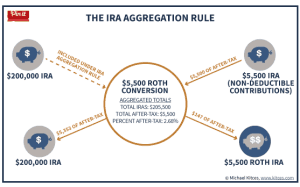
- Pro-Rata Rule: If you have other traditional IRAs with pre-tax contributions, the IRS uses the pro-rata rule to determine the taxable portion of your conversion. This rule can complicate the tax implications of a Backdoor Roth IRA.
- Timing: It's advisable to wait a short period between making the contribution to the traditional IRA and converting it to the Roth IRA to avoid the appearance of a step transaction.
Step-by-Step Guide to Executing a Backdoor Roth IRA Conversion
Step 1: Open a Traditional IRA
If you don’t already have a traditional IRA account, the first step is to open one. Many financial institutions offer traditional IRAs, so choose one that aligns with your investment goals.
Step 2: Make a Non-Deductible Contribution
Contribute the maximum allowable amount to your traditional IRA. For the tax year 2023, the contribution limit is set by the IRS. Ensure that this contribution is non-deductible, meaning you will not use it to reduce your taxable income for that year.
Step 3: Wait (Optional)
While not strictly necessary, many financial advisors recommend waiting a short period (such as a few days or weeks) before converting the funds to a Roth IRA. This waiting period can help avoid complications with the IRS regarding the appearance of a step transaction.
Step 4: Convert to a Roth IRA
Once you're ready, initiate the conversion process by transferring the funds from your traditional IRA to your Roth IRA. This can typically be done through your financial institution's online platform or by contacting customer service.
Step 5: File Your Taxes Correctly
When filing your tax return, you will need to report the non-deductible contribution to your traditional IRA using IRS Form 8606. This form ensures that you are not taxed on the portion of the conversion that represents your non-deductible contributions.
Potential Benefits of a Backdoor Roth IRA
There are several advantages to utilizing a Backdoor Roth IRA strategy:
- Tax-Free Growth: Funds in a Roth IRA grow tax-free, allowing for potentially significant growth over time.
- Tax-Free Withdrawals: Qualified withdrawals during retirement are tax-free, providing a significant advantage for tax planning in retirement.
- No Required Minimum Distributions (RMDs): Unlike traditional IRAs, Roth IRAs do not require minimum distributions starting at age 72, allowing your funds to continue growing tax-free for longer.
Conclusion
Backdoor Roth IRA conversions can be a valuable strategy for high-income earners looking to take advantage of the benefits of a Roth IRA despite income limitations. By understanding the rules, limitations, and following a straightforward step-by-step process, you can successfully navigate this strategy. Always consider consulting with a financial advisor or tax professional to ensure that you are making the best decisions based on your individual financial situation.
Si quieres conocer otros artículos parecidos a Backdoor Roth IRA Conversions: Rules, Limits, and Step-by-Step Guide puedes visitar la categoría Taxes & Personal Finance.
Related posts