
Exploring Options Trading: Covered Calls and Puts for Income Generation
Options trading has become an increasingly popular strategy for investors seeking to diversify their portfolios and generate additional income. Among the various strategies available, covered calls and puts stand out as effective methods for income generation. In this article, we will delve into the mechanics of these two strategies, exploring how they work, their potential benefits, and the risks involved.
Understanding Options Trading
Options are financial contracts that give investors the right, but not the obligation, to buy or sell an underlying asset at a predetermined price within a specified timeframe. This ability to leverage movements in asset prices without outright ownership makes options a versatile tool in an investor's arsenal. The two primary types of options are:
- Call options: These give the holder the right to purchase an asset at a set price before the option expires.
- Put options: These grant the holder the right to sell an asset at a predetermined price before expiration.
What Are Covered Calls?
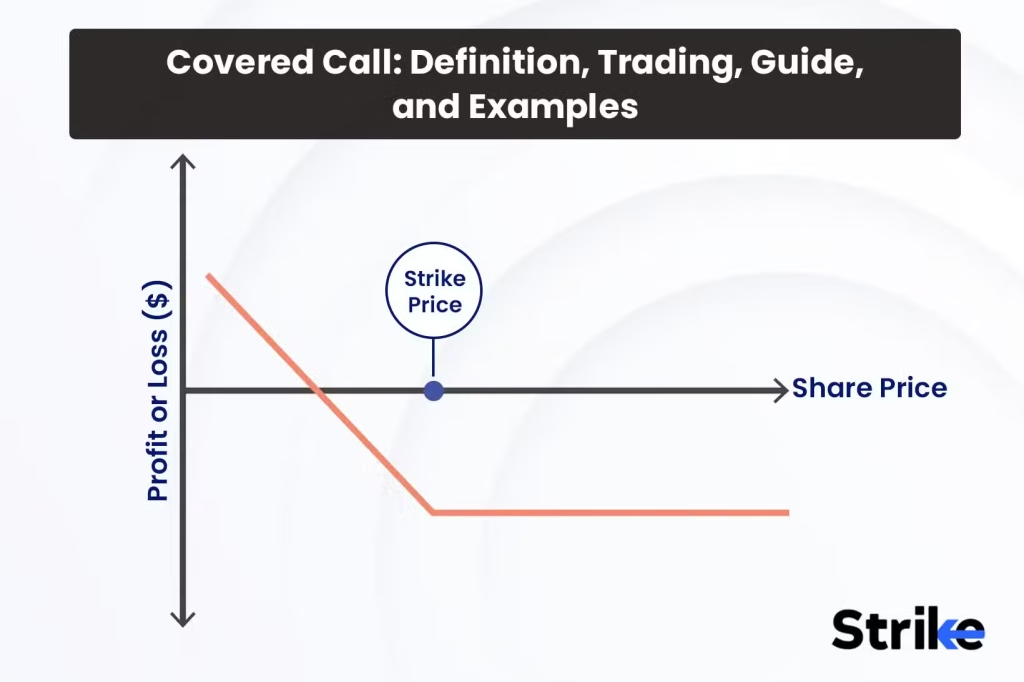
A covered call is an options strategy where an investor holds a long position in an asset and simultaneously sells call options on that same asset. This strategy generates income through the premiums received from selling the call options while still allowing for the potential appreciation of the asset.
How Covered Calls Work
When you sell a call option, you agree to sell your shares at a specified price (the strike price) if the buyer chooses to exercise the option. The premium you receive for selling the call provides immediate income, which can be particularly appealing in a flat or slightly bullish market. Here’s a step-by-step breakdown of how it works:
- Purchase shares of an underlying asset, such as stocks.
- Sell a call option against your shares, collecting the premium upfront.
- If the stock price rises above the strike price, the buyer may exercise the option, and you will sell your shares at that price.
- If the stock price remains below the strike price, you retain your shares and keep the premium received.
Benefits of Covered Calls
- Income generation: The primary advantage is the income from premiums, which can enhance overall returns.
- Downside protection: The premium received can help cushion against minor declines in the asset's price.
- Flexibility: This strategy works well in various market conditions, particularly in sideways or mildly bullish environments.
Risks of Covered Calls
Despite its advantages, covered calls come with risks, including:
- Limited upside potential: If the stock price surges, your profit is capped at the strike price plus the premium.
- Stock ownership risk: You remain exposed to losses if the stock price declines significantly.
What Are Puts?
Put options serve a different purpose compared to covered calls. They give the holder the right to sell an asset at a predetermined price, making them a useful tool for hedging or income generation. Selling puts can be an effective strategy to acquire stocks at a lower price while generating income from premiums.
How Puts Work
When you sell a put option, you receive a premium while committing to buy the underlying asset at the strike price if the buyer chooses to exercise the option. Here’s how this process generally unfolds:
- Choose a stock you want to own but prefer to buy at a lower price.
- Sell a put option for that stock, receiving a premium in return.
- If the stock price falls below the strike price, you may be obligated to buy the stock at that price.
- If the stock price stays above the strike price, you keep the premium and can repeat the process.
Benefits of Selling Puts
- Income generation: Like covered calls, selling puts provides immediate income through premiums.
- Buying opportunity: If the stock drops, you can purchase it at a lower price than its current market value.
- Market neutrality: This strategy can be appealing in sideways or bearish markets as a way to generate income.
Risks of Selling Puts
While selling puts can be advantageous, there are risks to consider:
- Potential losses: If the stock declines significantly, you may end up purchasing it at a higher price than its market value.
- Capital requirement: You need to have sufficient capital to cover the cost of purchasing the stock if the option is exercised.
Conclusion
Options trading, particularly through strategies like covered calls and selling puts, offers unique opportunities for income generation and portfolio management. While both strategies come with their own sets of benefits and risks, they can be effective tools for investors looking to enhance returns and mitigate downside exposure. As with any investment strategy, it’s crucial to conduct thorough research and consider your risk tolerance before diving into options trading. With the right approach, options can be a valuable addition to your investment toolkit.
Si quieres conocer otros artículos parecidos a Exploring Options Trading: Covered Calls and Puts for Income Generation puedes visitar la categoría Crypto.
Related posts