
How to Diversify Beyond the S&P 500 with International Stocks
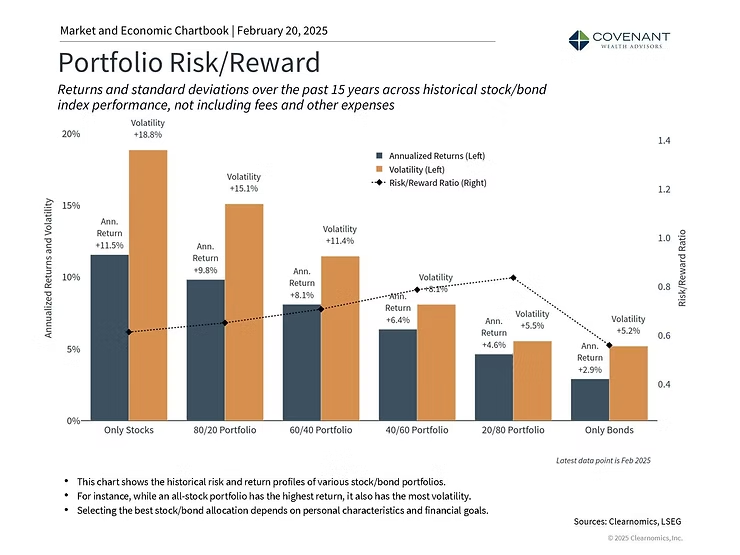
Investing in the stock market often leads many investors to focus primarily on the S&P 500, a benchmark that represents the largest U.S. companies. While this index can provide a solid foundation for a portfolio, it’s crucial to recognize the potential benefits of diversifying beyond domestic equities. International stocks offer unique opportunities for growth, risk mitigation, and exposure to different economic cycles. This article will explore how to diversify your portfolio with international stocks, why it’s essential, and effective strategies to consider.
Understanding the Importance of Diversification
Diversification is a fundamental principle of investing. It involves spreading investments across various financial instruments, industries, and geographies to reduce risk. Relying solely on the S&P 500 means your portfolio is exposed to the performance of a specific group of companies, which can be influenced by domestic economic conditions and market trends. Here’s why diversifying with international stocks can be beneficial:
- Access to Growth Markets: Emerging and developing markets can offer higher growth potential compared to mature markets like the U.S.
- Risk Mitigation: International stocks can help offset losses during domestic downturns, as global markets may not always move in tandem.
- Currency Diversification: Investing in foreign stocks can provide exposure to different currencies, which can be advantageous if the U.S. dollar weakens.
Types of International Stocks
When considering international stocks, investors can choose from various categories. Understanding these categories can help tailor your portfolio to meet your investment goals:
1. Developed Markets
Developed markets include countries with established economies, such as those in Europe, Japan, and Australia. These markets tend to have stable political environments and mature financial systems, making them generally less volatile than emerging markets.
2. Emerging Markets
Emerging markets consist of countries with rapidly growing economies, such as India, Brazil, and parts of Southeast Asia. While these markets can offer significant growth potential, they also come with higher risks due to economic and political instability.
3. Frontier Markets
Frontier markets are less developed than emerging markets and can offer high-risk, high-reward opportunities. Countries in this category may include those in Africa and parts of the Middle East. While the growth potential is significant, it’s essential to conduct thorough research before investing.
Strategies for Investing in International Stocks
Diversifying into international stocks can be achieved through various strategies. Here are some effective methods to consider:
1. Direct Investment in Foreign Stocks
One option is to buy shares of foreign companies directly. This approach requires a brokerage account that allows international trading and may involve additional fees. Investors should also be mindful of the tax implications and regulations in the foreign country.
2. International Mutual Funds and ETFs
For those looking for a more hands-off approach, international mutual funds and exchange-traded funds (ETFs) offer a simpler way to gain exposure to foreign markets. These funds pool money from multiple investors to purchase a diversified portfolio of international stocks. Look for funds that focus on specific regions or sectors that align with your investment goals.
3. Global Sector Funds
Investing in sector-specific international funds can provide targeted exposure to industries that are thriving abroad, such as technology, healthcare, or consumer goods. This strategy allows investors to capitalize on global trends while still maintaining diversification.
Evaluating Risks and Challenges
While there are numerous benefits to investing in international stocks, it’s essential to recognize the risks and challenges involved:
- Currency Risk: Fluctuations in currency exchange rates can impact the returns on your investments.
- Political and Economic Risks: International markets may face instability due to political changes, economic downturns, or regulatory shifts.
- Market Accessibility: Some markets may be less accessible or have lower liquidity, making it challenging to enter or exit positions.
Conclusion
Diversifying beyond the S&P 500 by investing in international stocks can enhance your investment strategy and help mitigate risks associated with domestic market fluctuations. By understanding the different types of international stocks, employing effective investment strategies, and being aware of the associated risks, you can build a more resilient and diversified portfolio. Remember to conduct thorough research and consider your risk tolerance before venturing into international markets. With the right approach, international stocks can play a vital role in your long-term investment success.
Si quieres conocer otros artículos parecidos a How to Diversify Beyond the S&P 500 with International Stocks puedes visitar la categoría Market Psychology & Advanced Analysis.
Related posts