
Understanding P/E Ratios: How to Evaluate If a Stock Is Overvalued
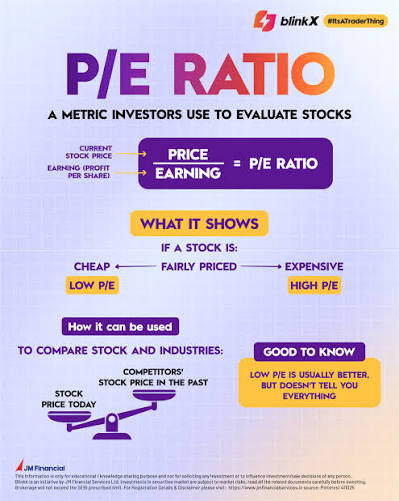
When it comes to investing in the stock market, one of the most important metrics to consider is the Price-to-Earnings (P/E) ratio. This financial indicator is a valuable tool for investors looking to determine whether a stock is overvalued or undervalued. In this article, we will delve into what P/E ratios are, how to calculate them, their significance in the investment decision-making process, and how to interpret them in the context of evaluating a stock's valuation.
What is a P/E Ratio?
The P/E ratio is a valuation metric that compares a company's current share price to its earnings per share (EPS). It provides investors with a straightforward way to assess the relative value of a stock. Essentially, the P/E ratio indicates how much investors are willing to pay for each dollar of earnings generated by the company.
Calculating the P/E Ratio
Calculating the P/E ratio is simple. The formula is as follows:
- P/E Ratio = Share Price / Earnings Per Share (EPS)
For example, if a company’s share price is $50 and its EPS is $5, the P/E ratio would be:
- P/E Ratio = $50 / $5 = 10
This means investors are willing to pay $10 for every dollar of earnings the company generates.
Types of P/E Ratios
There are two main types of P/E ratios that investors often use: trailing P/E and forward P/E.
1. Trailing P/E
The trailing P/E ratio uses the earnings from the previous 12 months. This is the most commonly used P/E ratio and is based on actual earnings, providing a historical perspective on the company's performance.
2. Forward P/E
The forward P/E ratio, on the other hand, uses projected earnings for the next 12 months. This ratio is useful for evaluating a company's future growth potential but can be less reliable due to the uncertainty surrounding earnings forecasts.
Why is the P/E Ratio Important?
The P/E ratio is important for several reasons:
- Valuation Comparison: It allows investors to compare the valuation of different companies, even those in different industries. A higher P/E may indicate that a stock is overvalued compared to its peers.
- Investment Decisions: Investors can use the P/E ratio to make informed decisions about buying or selling stocks. A low P/E ratio may suggest a bargain, while a high P/E might signal excessive valuation.
- Market Sentiment: The P/E ratio can reflect market sentiment regarding a company's growth prospects. A rising P/E might indicate increased investor confidence, while a declining P/E could suggest concerns about future performance.
Interpreting P/E Ratios
While the P/E ratio is a useful tool, it is essential to interpret it in context. Here are some factors to consider when evaluating a P/E ratio:
1. Industry Average
Compare the P/E ratio of the stock in question to the average P/E ratio of its industry. Different sectors have different growth expectations, and what may be considered overvalued in one industry could be deemed reasonable in another.
2. Historical Performance
Look at the company's historical P/E ratios. If the current P/E is significantly higher or lower than its historical average, it may signal an overvaluation or undervaluation.
3. Growth Rates
Consider the company's expected growth rate. A high P/E ratio may be justified if the company is expected to grow its earnings rapidly, while a low P/E could be alarming if the company is experiencing declining earnings.
4. Market Conditions
Broader market conditions can also impact P/E ratios. In bullish markets, P/E ratios tend to expand as investor confidence grows, while in bearish markets, they often contract.
Limitations of the P/E Ratio
While the P/E ratio is a valuable metric, it has its limitations:
- Ignores Debt: The P/E ratio does not take a company's debt into account. A company with a high P/E ratio may have significant debt that could affect its earnings and overall value.
- Not Universal: The P/E ratio may not be applicable to all companies, particularly those with negative earnings. In such cases, the ratio becomes meaningless.
- Short-Term Focus: The P/E ratio primarily focuses on short-term earnings, which may not capture a company's long-term potential or sustainability.
Conclusion
The P/E ratio is an essential tool for investors looking to evaluate whether a stock is overvalued or undervalued. By understanding how to calculate and interpret P/E ratios, you can make more informed investment decisions. However, it is crucial to consider the P/E ratio in context, including industry standards, historical performance, growth expectations, and broader market conditions. While the P/E ratio provides valuable insights, it should be used in conjunction with other metrics and analyses for a comprehensive view of a company's valuation.
Si quieres conocer otros artículos parecidos a Understanding P/E Ratios: How to Evaluate If a Stock Is Overvalued puedes visitar la categoría Stock Market & Investing Strategies.
Related posts