
Discounted Cash Flow (DCF) Model: How to Calculate Intrinsic Value
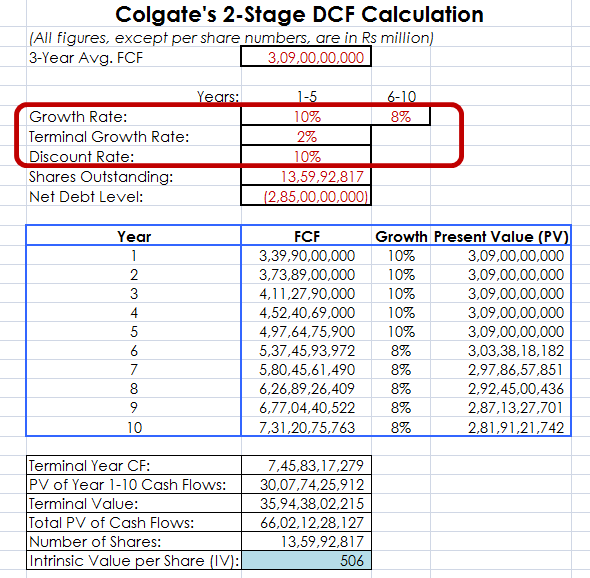
The Discounted Cash Flow (DCF) model is a cornerstone of financial analysis that allows investors to estimate the intrinsic value of an asset, typically a stock. By understanding how to calculate intrinsic value, investors can make informed decisions about whether an asset is undervalued or overvalued in the market. In this article, we'll delve into the DCF model, its components, and the step-by-step process of calculating intrinsic value.
What is the Discounted Cash Flow Model?
The DCF model is a quantitative method used to determine the value of an investment based on its expected future cash flows. The fundamental premise is that the value of money decreases over time due to inflation and opportunity cost. Therefore, future cash flows must be discounted back to their present value to arrive at an accurate valuation.
Key Components of the DCF Model
Understanding the DCF model requires familiarity with its key components, which include:
- Future Cash Flows: These are the expected cash inflows from the asset over a specific period.
- Discount Rate: This is the rate used to convert future cash flows into their present value. It reflects the risk associated with the investment.
- Terminal Value: This represents the value of the asset at the end of the explicit forecast period, capturing the value beyond that timeframe.
- Present Value: This is the current worth of future cash flows when discounted at the appropriate rate.
Step-by-Step Guide to Calculating Intrinsic Value Using DCF
Calculating intrinsic value using the DCF model involves several steps. Below is a detailed guide:
1. Project Future Cash Flows
The first step in the DCF analysis is to project the future cash flows of the asset. This typically involves examining historical financial performance, market trends, and growth prospects. Analysts often project cash flows for 5-10 years into the future. Cash flows can include operating income, depreciation, and changes in working capital.
2. Determine the Discount Rate
The discount rate is crucial as it accounts for the time value of money and the risk of the investment. A common method for determining the discount rate is to use the Weighted Average Cost of Capital (WACC), which reflects the average rate that a company is expected to pay its security holders to finance its assets.
3. Calculate the Present Value of Future Cash Flows
Once future cash flows and the discount rate are established, present value can be calculated using the following formula:
Present Value = Cash Flow / (1 + r)^n
Where:
- Cash Flow: The projected cash flow in a given year.
- r: The discount rate.
- n: The year number (1, 2, 3, etc.).
Repeat this calculation for each projected cash flow period.
4. Calculate the Terminal Value
The terminal value estimates the asset's value at the end of the projection period. Common methods for calculating terminal value include the Gordon Growth Model or the exit multiple approach. The Gordon Growth Model is calculated as follows:
Terminal Value = Final Year Cash Flow x (1 + g) / (r - g)
Where:
- g: The perpetual growth rate of cash flows.
5. Discount the Terminal Value to Present Value
Just like future cash flows, the terminal value must also be discounted back to its present value using the same discount rate:
Present Value of Terminal Value = Terminal Value / (1 + r)^n
6. Sum the Present Values
The final step is to sum all the present values of the projected cash flows and the present value of the terminal value. This total gives you the intrinsic value of the asset.
Interpreting the Results
Once you have calculated the intrinsic value, you can compare it to the current market price of the asset. If the intrinsic value is higher than the market price, the asset may be undervalued, presenting a potential buying opportunity. Conversely, if the intrinsic value is lower than the market price, it may be overvalued.
Limitations of the DCF Model
While the DCF model is a powerful tool, it is not without limitations:
- Dependence on Assumptions: The accuracy of the DCF model is heavily dependent on the quality of the assumptions regarding future cash flows and the discount rate.
- Complexity: The model can become complex when projecting cash flows or determining the appropriate discount rate.
- Market Conditions: The DCF model might not account for sudden changes in market conditions or economic factors that can affect cash flow projections.
Conclusion
The Discounted Cash Flow model is an essential method for investors who want to assess the intrinsic value of an asset. By understanding how to project future cash flows, determine an appropriate discount rate, and calculate present values, investors can make informed decisions based on their analysis. While the DCF model has its limitations, when used in conjunction with other valuation methods, it can provide valuable insights into investment opportunities in the stock market.
Si quieres conocer otros artículos parecidos a Discounted Cash Flow (DCF) Model: How to Calculate Intrinsic Value puedes visitar la categoría Market Psychology & Advanced Analysis.
Related posts