
Commodity Supercycles: How Oil, Gold, and Metals Drive Inflation Trends
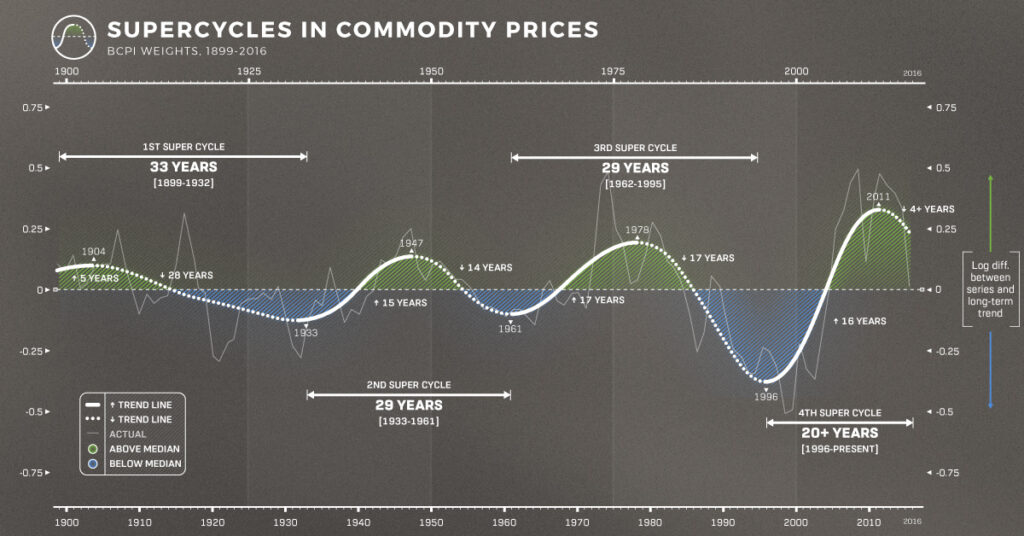
The world of economics is often influenced by various market forces, and one of the most significant among them is the phenomenon of commodity supercycles. These extended periods of rising commodity prices can have profound effects on inflation trends, influencing everything from consumer spending to Federal Reserve policy. In this article, we will explore how commodities like oil, gold, and metals shape inflation and what that means for the broader economy.
Understanding Commodity Supercycles
A commodity supercycle refers to a prolonged period during which the prices of commodities rise significantly, typically lasting for several years or even decades. These cycles are often driven by a combination of supply and demand dynamics, geopolitical factors, and macroeconomic trends. Historically, supercycles have been associated with major economic events, such as industrialization, globalization, or shifts in major economies.
Historical Context
To grasp the concept of commodity supercycles, it is essential to look back at historical patterns. The last notable supercycle occurred from the early 2000s until around 2014, driven largely by rapid industrial growth in emerging economies like China and India. During this period, prices for oil, metals, and agricultural products soared, impacting inflation rates across the globe.
The Role of Key Commodities
Three key commodities—oil, gold, and metals—play a crucial role in driving inflation trends. Each commodity influences the economy in unique ways, creating ripple effects throughout various sectors.
Oil
Oil is often considered the lifeblood of the global economy. Fluctuations in oil prices can have immediate and far-reaching impacts on inflation. When oil prices rise, the cost of transportation and production increases, leading businesses to pass on these costs to consumers. This phenomenon is known as cost-push inflation.
- Supply Shocks: Events such as geopolitical tensions or natural disasters can disrupt oil supply, leading to sudden price spikes.
- Demand Growth: Rapid economic growth in emerging markets increases demand for oil, further driving prices up.
Gold
Gold serves as a hedge against inflation and currency devaluation. When inflation rises, investors often flock to gold as a safe haven, driving up its price. The relationship between gold prices and inflation expectations is significant, as a rising gold price typically signals concerns over currency stability and purchasing power.
- Investor Sentiment: Increased demand for gold during inflationary periods can lead to a self-reinforcing cycle, where rising prices further fuel inflation expectations.
- Central Bank Policies: Central banks may increase gold reserves as a strategy to combat inflation, impacting global demand.
Metals
Industrial metals such as copper, aluminum, and nickel are crucial for various sectors, including construction and manufacturing. As economies grow, demand for these metals increases, leading to higher prices. This rise in metal prices can contribute to inflation in several ways.
- Construction Costs: Higher prices for metals lead to increased construction costs, which can be passed on to consumers in the form of higher home prices.
- Manufacturing Expenses: Rising metal prices can increase production costs for manufacturers, leading to higher prices for consumer goods.
Linking Commodities to Inflation Trends
The relationship between commodity prices and inflation is complex but critical for understanding broader economic trends. As commodity prices rise, they can trigger inflationary pressures in various ways:
- Cost-Push Inflation: As discussed, rising commodity prices can lead to increased production costs, prompting businesses to raise prices.
- Demand-Pull Inflation: Strong demand for commodities can indicate robust economic growth, which may lead to increased consumer spending and further inflation.
- Expectations: As commodity prices rise, consumer and business expectations for future inflation can create a self-fulfilling prophecy, leading to even higher prices.
The Federal Reserve's Response
The Federal Reserve plays a crucial role in managing inflation and economic stability. When faced with rising inflation driven by commodity prices, the Fed may respond in several ways:
- Interest Rate Adjustments: To combat inflation, the Fed may raise interest rates, which can cool off borrowing and spending.
- Quantitative Easing: Conversely, in times of economic downturn, the Fed may employ quantitative easing to stimulate the economy, affecting commodity prices and inflation.
Conclusion
Commodity supercycles significantly influence inflation trends, shaping economic policies and consumer behavior. Understanding how oil, gold, and metals drive these trends is essential for investors, policymakers, and consumers alike. As we continue to navigate an ever-changing economic landscape, keeping an eye on commodity prices can provide valuable insights into the future of inflation and overall economic health.
Si quieres conocer otros artículos parecidos a Commodity Supercycles: How Oil, Gold, and Metals Drive Inflation Trends puedes visitar la categoría Macroeconomics & Federal Reserve Policy.
Related posts