
Understanding the National Debt Ceiling and Its Threat to Financial Markets
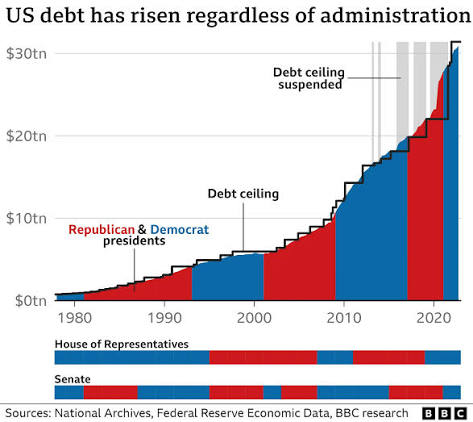
The national debt ceiling is a critical aspect of U.S. fiscal policy that often generates significant debate among policymakers and the public alike. It refers to the maximum amount of money the federal government is allowed to borrow to cover its existing obligations. When discussions about the debt ceiling arise, they can create uncertainty in financial markets, leading to volatility and potential disruptions. In this article, we will explore what the national debt ceiling is, how it functions, its implications for the economy, and the potential risks it poses to financial markets.
What is the National Debt Ceiling?
The national debt ceiling is a legislative limit on the total amount of debt that the U.S. Treasury can issue. This includes both public debt, which is owned by outside investors, and intragovernmental holdings, such as the Social Security Trust Fund. The ceiling is set by Congress and must be raised periodically to allow the government to meet its financial obligations, including interest payments on existing debt, salaries for federal employees, and funding for various programs.
When the government reaches this borrowing limit, it cannot issue new debt until Congress raises or suspends the ceiling. Failure to do so can lead to a government shutdown or, in the worst-case scenario, a default on its obligations.
How the Debt Ceiling Works
The process of adjusting the debt ceiling involves a series of political negotiations, often resulting in intense debates among lawmakers. Here are some key points to understand how it works:
- Legislative Approval: In order to raise the debt ceiling, Congress must pass a bill. This often requires bipartisan support, as both parties may have differing views on fiscal policy.
- Debt Issuance: Once the ceiling is raised, the Treasury can issue new bonds to raise funds. This borrowing is necessary to finance government operations and pay existing debt obligations.
- Temporary Measures: If the debt ceiling is not raised in time, the Treasury can take temporary measures, such as suspending the issuance of certain types of debt or using cash reserves. However, these measures are not sustainable in the long run.
The Economic Implications of the Debt Ceiling
The debt ceiling is not just a bureaucratic hurdle; it has real implications for the economy. Here are some key economic factors influenced by the debt ceiling:
- Government Spending: The debt ceiling constrains government spending. If it is not raised, the government may have to cut spending or halt programs, which can negatively impact economic growth.
- Investor Confidence: Uncertainty surrounding the debt ceiling can erode investor confidence. If investors fear that the U.S. government may default on its obligations, they may demand higher interest rates to compensate for perceived risk.
- Credit Rating: Prolonged debates or failure to raise the debt ceiling can lead to downgrades in the U.S. credit rating. A lower credit rating increases borrowing costs for the government, which can have a cascading effect on interest rates across the economy.
The Threat to Financial Markets
The implications of the national debt ceiling extend beyond the government’s finances; they pose substantial risks to financial markets. Here are some of the primary threats:
1. Market Volatility
When discussions about raising the debt ceiling dominate headlines, financial markets can become volatile. Investors often react to news about potential standoffs or delays in reaching an agreement. This volatility can result in sudden swings in stock prices, bond yields, and currency values.
2. Increased Borrowing Costs
If the debt ceiling is not raised in a timely manner, the U.S. government may face higher borrowing costs. Investors may demand higher yields on U.S. Treasury securities, leading to increased interest rates across the economy. This can subsequently affect consumer borrowing, business investments, and overall economic growth.
3. Risk of Default
While the U.S. has never defaulted on its debt, the mere threat of default can create panic in financial markets. A default could lead to catastrophic consequences, including a loss of confidence in U.S. financial stability, disruptions in global markets, and a potential recession.
Conclusion
The national debt ceiling is a significant component of U.S. fiscal policy that has far-reaching implications for both the economy and financial markets. While it serves as a mechanism for controlling government borrowing, it can also create uncertainty and volatility in financial markets when debates arise. Understanding the mechanics of the debt ceiling and its potential threats is crucial for investors, policymakers, and the public. As discussions around fiscal responsibility continue, it is essential to recognize the importance of timely action to raise or suspend the debt ceiling to mitigate risks and maintain economic stability.
Si quieres conocer otros artículos parecidos a Understanding the National Debt Ceiling and Its Threat to Financial Markets puedes visitar la categoría Macroeconomics & Federal Reserve Policy.
Related posts