
How Consumer Confidence Indices Predict Future Market Movements
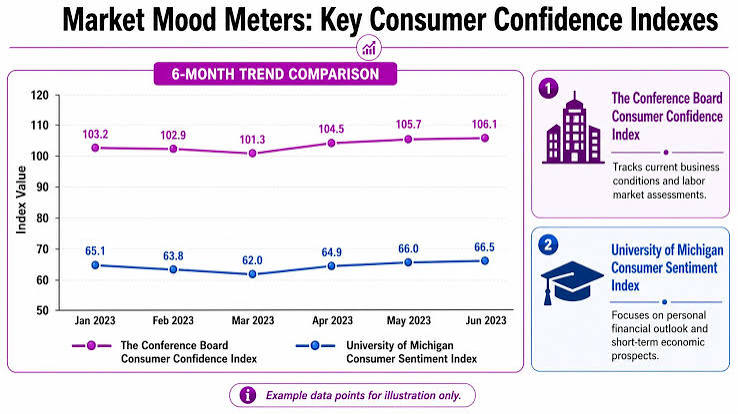
In the intricate world of economics and finance, understanding consumer behavior is crucial. One of the most significant indicators of consumer sentiment is the Consumer Confidence Index (CCI). This metric provides insights into how consumers feel about the economy's current and future state, which can, in turn, influence market movements. In this post, we will explore what consumer confidence indices are, how they are measured, and their role in predicting future market trends.
What is Consumer Confidence?
Consumer confidence refers to the degree of optimism that individuals feel about the overall state of the economy and their personal financial situation. When consumers are confident, they are more likely to spend money, which can drive economic growth. Conversely, when confidence is low, consumers may cut back on spending, leading to slower economic activity.
Understanding Consumer Confidence Indices
The Consumer Confidence Index is a statistical measure that gauges the degree of optimism or pessimism that consumers express regarding their financial conditions and the state of the economy. The most recognized indices in the United States are published by The Conference Board and the University of Michigan.
Components of the Index
Consumer confidence indices typically consist of two main components:
- Current Economic Conditions: This aspect evaluates how consumers perceive the present economic situation, including their current income and job availability.
- Future Expectations: This measures consumers' outlook on the economy over the next six months, focusing on their expectations for income, business conditions, and employment opportunities.
How Consumer Confidence Indices are Measured
The methodology for calculating consumer confidence involves conducting surveys with a representative sample of households. These surveys often include questions about consumers' perceptions of both current and future economic conditions. The results are then aggregated to produce the index value, which is often compared against historical data to assess trends.
The Connection Between Consumer Confidence and Market Movements
Consumer confidence indices are closely watched by economists, investors, and policymakers because they serve as a leading indicator of economic health. Here are some ways in which consumer confidence affects market movements:
1. Consumer Spending
Consumer spending accounts for a significant portion of economic activity. When confidence is high, consumers are more likely to spend money on goods and services, which can boost corporate revenues and lead to higher stock prices. Conversely, if the index shows declining confidence, companies may face lower sales, impacting their stock performance negatively.
2. Investment Decisions
Investors often use consumer confidence indices to make decisions about investing in stocks or other assets. High consumer confidence can signal potential growth in the economy, prompting investors to buy stocks, while low confidence may lead to a more cautious approach.
3. Central Bank Policies
The Federal Reserve and other central banks closely monitor consumer confidence as part of their economic assessments. A decline in consumer confidence may prompt a central bank to lower interest rates or implement stimulus measures to encourage spending, which can further influence market dynamics.
Limitations of Consumer Confidence Indices
While consumer confidence indices are valuable tools for predicting economic trends, they are not without limitations. Some of these include:
- Subjectivity: Consumer sentiment can be influenced by recent news events, political developments, or social movements, which may not reflect the underlying economic reality.
- Lagging Indicator: Although consumer confidence is often viewed as a leading indicator, it can also lag behind actual economic conditions, meaning it might not always predict immediate market movements accurately.
- Regional Variations: Consumer confidence can vary significantly across different regions, making it essential to consider local economic conditions when interpreting the data.
Conclusion
Consumer confidence indices serve as a crucial barometer of economic sentiment, providing valuable insights into future market movements. By understanding the trends and implications of these indices, investors and policymakers can make informed decisions that reflect the prevailing economic climate. While they are not infallible, the insights garnered from consumer confidence can help navigate the complexities of the stock market and broader economy. As we move forward, keeping an eye on these indices will be essential for anyone looking to understand the economic landscape and its potential impacts on market dynamics.
Si quieres conocer otros artículos parecidos a How Consumer Confidence Indices Predict Future Market Movements puedes visitar la categoría Macroeconomics & Federal Reserve Policy.
Related posts